Dec 6, 2025 – Feb 22, 2026
Marc Alexandre Dumoulin
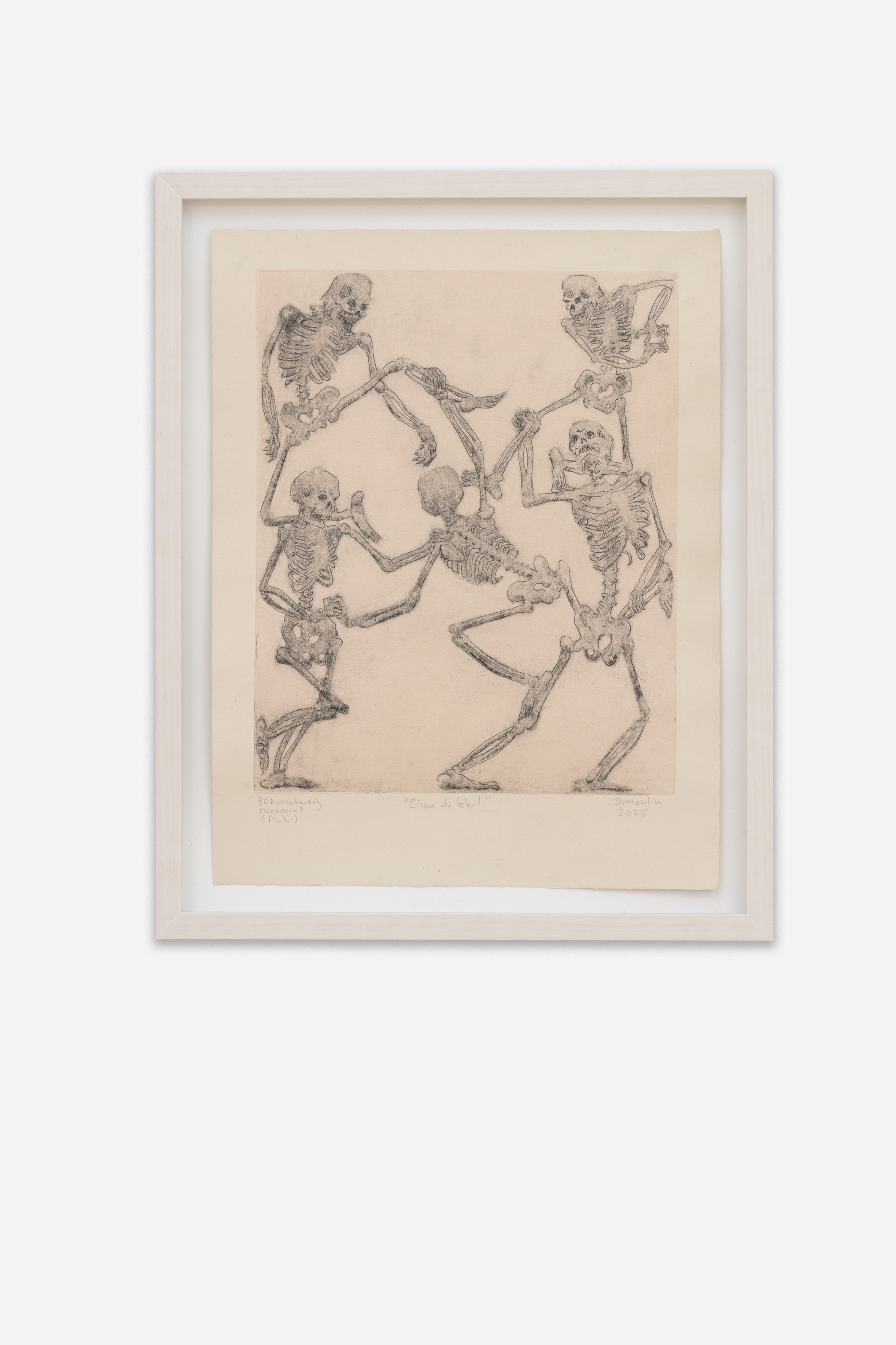
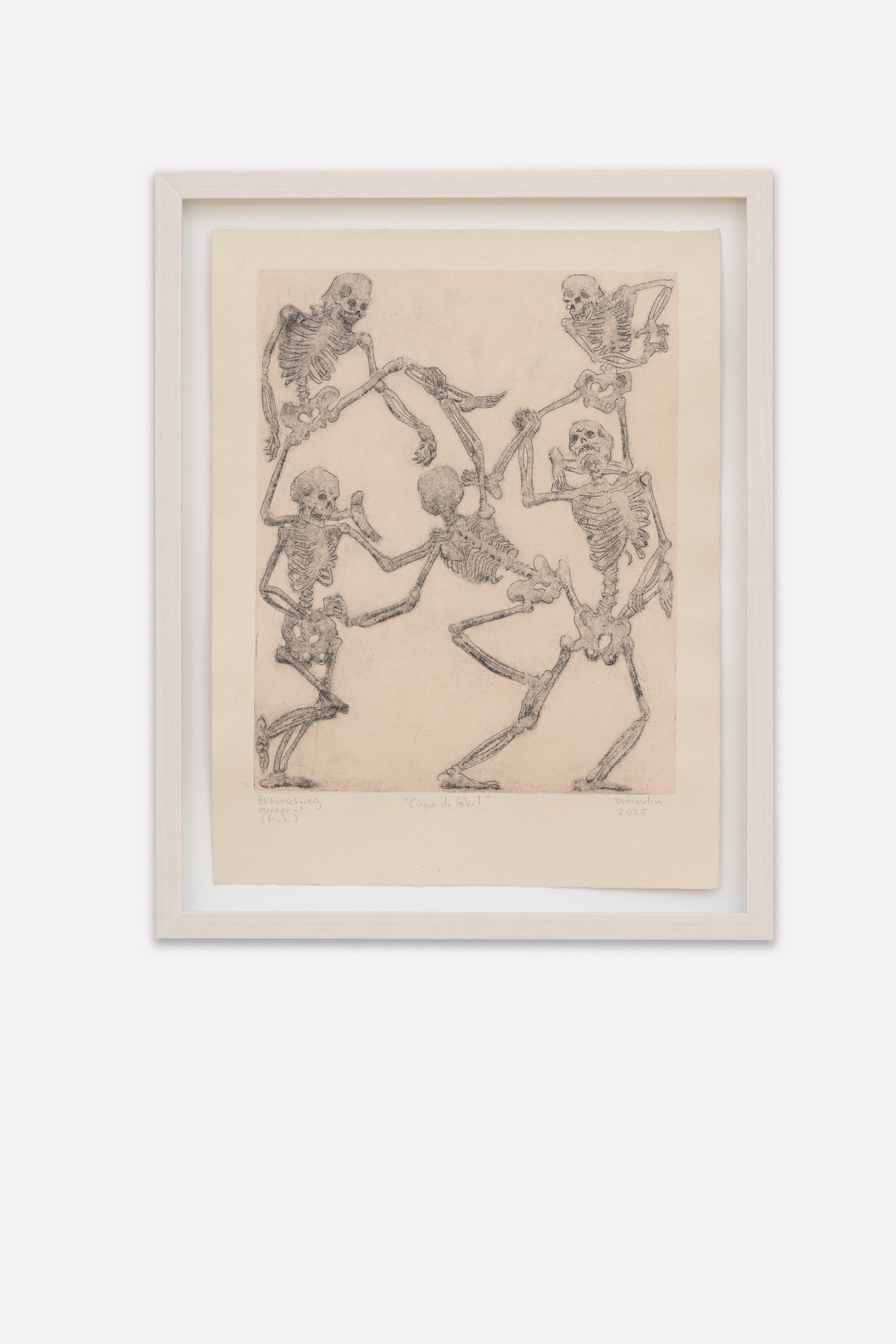
Cirque Du Soleil, 2025
-
Cirque Du Soleil, 2025
Etching with chine-collé
32 × 24 cm
Edition: 5 + 3 A.P.
unframed, with certificatePhoto: Hannah Jung.
€ 500
OrderHave you ever really looked at a skeleton? How complex it is? 206 bones. Of those, 106 are in the hands and feet alone. What an evolutionary marvel! Just think of the millennia of evolution that ultimately produced its form and delicacy. What a strange, calcified sponge.
It reminds me of a fundamental truth about nature: that nature is profoundly excessive. It expresses itself through abundance. Listen to me. The sun fuses 600 million tons of hydrogen every second. It wastes energy like nothing else in the solar system. From this arises heat and light, radiating outward, eventually reaching our planet and creating the conditions for life. Earth’s flora grows in response, stretching toward the sun’s rays, hungry for warmth, for light, for life. Plants grow in the most unlikely places; they twist into impossible shapes, tumble over each other, invade other species, die, rot, and fertilize the soil for future generations. All of this just to bathe in sunlight.
Animals eat plants. Then, in turn, they eat more vulnerable animals or are themselves eaten by larger, stronger predators. Insects feed on the carcasses of animals. Plants consume insects. Species die, others are born. This natural feast of eaters and eaten, of arising and returning to the earth, has been ongoing for millions of years, and it is precisely this that makes the emergence of complex life forms possible. Evolutionary theory describes a world that thrives on the corpses of previous generations. Life wastes, and wastes, and wastes—and it is this unplanned generosity that allows paradigms to shift, that allows new life forms to take shape. That allows the bones in our skeleton to slowly change and adapt into a form that is less easily consumed.
Not only is humanity the product of this natural abundance, but the fact that we are cultural beings could also be considered an evolutionary trait. We lack the claws and fangs of a predator. We lack the agility of prey. We had to band together in groups to survive; we had to share work and care. The stories we told each other, and the symbols we exchanged, became central to maintaining a measure of social cohesion—they ensured the survival of our species. We hoard stories and symbols for comfort. Eram quod es; eris quod sum—“I was what you are; you will be what I am.” These lines from Horace adorn countless gravestones around the world.
We have evolved into a species shaped by myth.